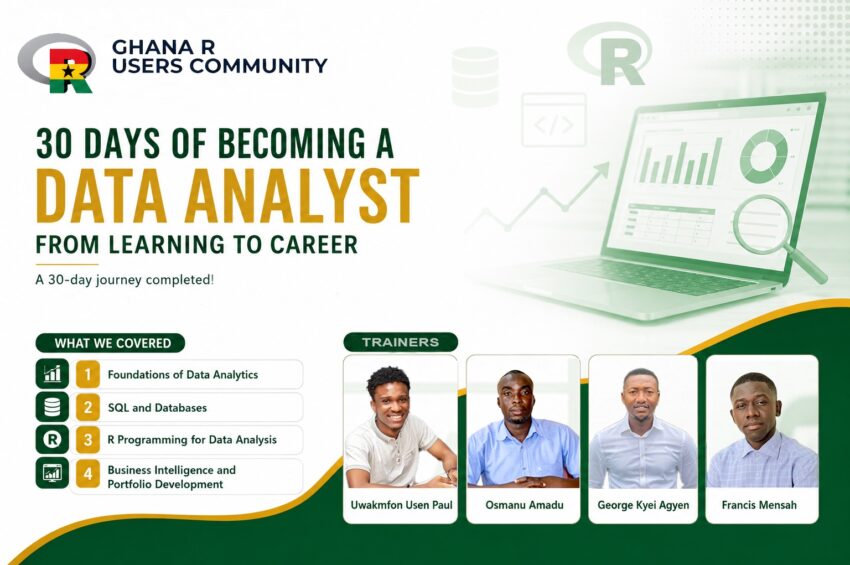
62 participants. 30 days. Four modules. One goal: building practical data skills that can open doors.
For 30 days, the Ghana R Users Community brought together students, researchers, early-career professionals, and data enthusiasts for the first edition of its 30 Days of Becoming a Data Analyst programme.
The programme ran from 1 September to 3 October 2026, taking participants through a structured series of practical sessions, assignments, and projects designed to build their data analytics skills.
The programme was designed around a simple idea: learning data analysis should go beyond watching tutorials and collecting certificates. Participants needed opportunities to work with data, practise new tools, complete projects, and begin thinking about how those skills could be applied in the real world.
With 62 registered participants, the first edition took learners through four carefully structured modules, moving from the foundations of data analytics to SQL, R programming, business intelligence, and portfolio development.
And then, after the 30 days were over, there was one more question to answer:
What do you actually do with these skills?
Starting With the Foundations
The programme opened with Foundations of Data Analytics, handled by Uwakmfon Usen Paul.
The module introduced participants to data analytics and possible career paths, different types of data and data collection methods, Microsoft Excel for data analysis, and descriptive statistics.
Participants also worked on a mini project, giving them an early opportunity to move from concepts to application.
It was a fitting place to start: before getting into programming and advanced tools, understand the data, understand the questions, and understand what an analyst is actually expected to do.
Then Came SQL and Databases
The second module, SQL and Databases, was handled by Osmanu Amadu.
Participants were introduced to databases and SQL before moving into practical queries using SELECT, WHERE, ORDER BY, aggregations, joins, GROUP BY, HAVING, and CASE statements.
The module also introduced data extraction for analysis and concluded with an SQL project.
For aspiring analysts, this was an important step. Data analysis often begins long before a chart is produced. First, you have to find the data you need and know how to work with it.
Getting Into R
The third module moved participants into programming with R, handled by George Kyei Agyen.
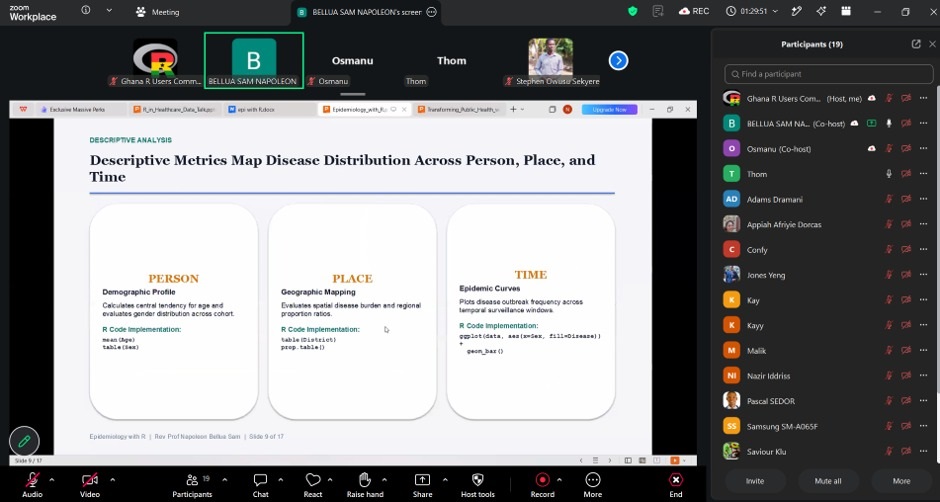
Participants were introduced to R and RStudio, followed by data import and data wrangling with dplyr. They explored data visualisation with ggplot2, exploratory data analysis, and data reporting with Quarto or R Markdown.
Another mini project brought the module back to practical application.
This was also where participants began bringing several pieces together: data preparation, analysis, visualisation, and reporting in a reproducible workflow.
From Analysis to Business Intelligence
The fourth module, Business Intelligence and Portfolio Development, returned to Osmanu Amadu. The focus shifted from analysing data to presenting it in ways that can support decisions.
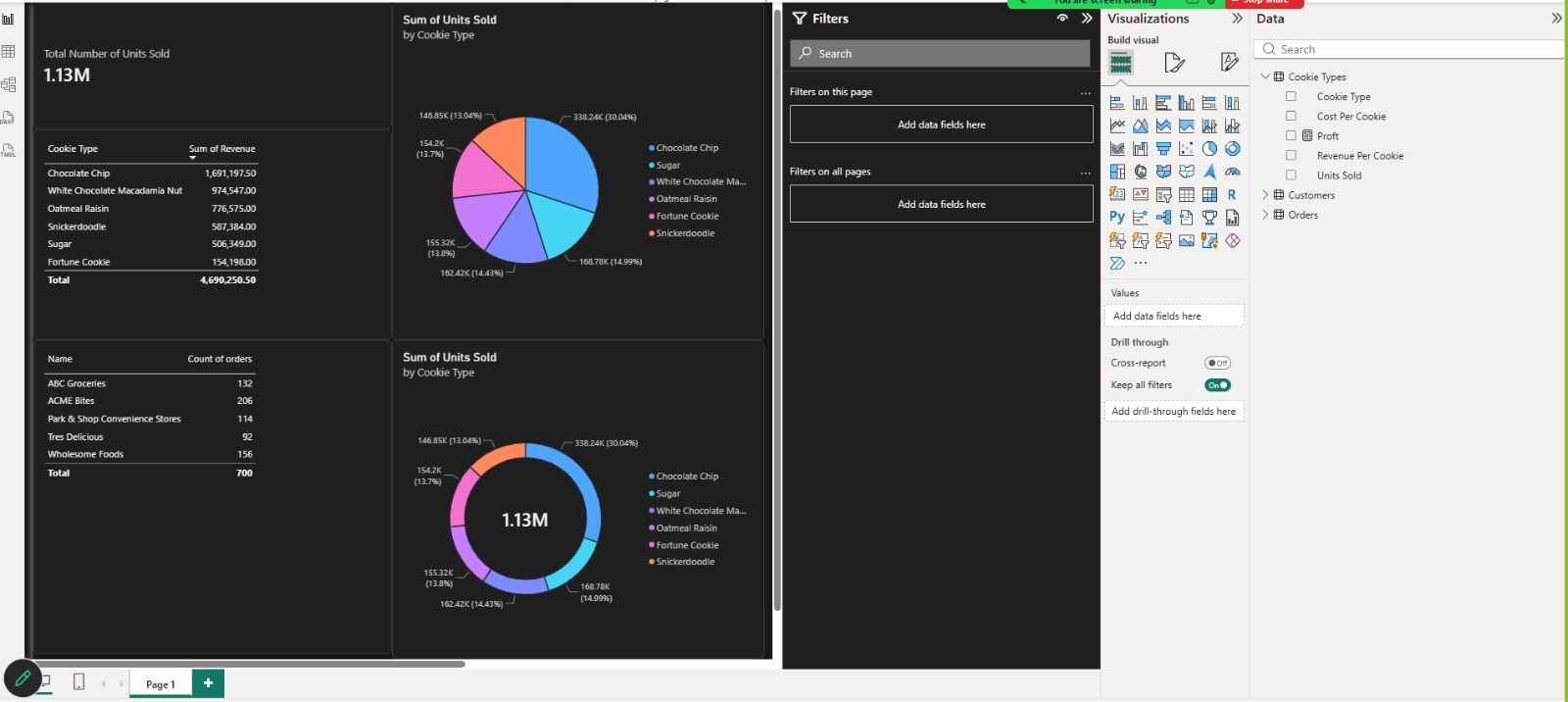
Participants were introduced to Power BI, including data modelling and dashboard development. They explored dashboard design, communicating data insights and storytelling, and worked towards a capstone project.
But the module went a step further. Participants were also introduced to portfolio and CV development, as well as mock interviews and a career roadmap. The message was clear: technical skills are important, but being able to demonstrate those skills matters just as much.
Beyond the 30 days: From Skills to Career and Income
As a follow-up to the programme, Francis Mensah led a session on “From Skills to Career & Income: What Employers Want + How to Earn Money Using Your Data Analytics Skills.” The session connected the technical skills participants had developed during the 30 days with the realities of building a career in data. Francis emphasised that certificates alone are not enough; employers want to see evidence of what a person can do. Participants were encouraged to build portfolios around practical projects, dashboards, reports and analyses, while also developing communication, problem-solving, teamwork, adaptability and other professional skills.
The session also encouraged participants to think beyond traditional employment and consider how their data skills could create different opportunities, including freelancing, consulting, tutoring, remote work, content creation and digital products. A key message was the importance of moving from being a job-seeker to becoming a solution-provider, understanding the problems organisations face and showing how data skills can help address them. Francis closed with a practical career roadmap centred on strengthening skills, building real projects, showcasing evidence, developing a professional network and continuing to learn.
Looking Ahead
The first edition of 30 Days of Becoming a Data Analyst brought together 62 participants for a month of structured learning, practical assignments and projects across four areas of data analytics.
It also gave the Ghana R Users Community another opportunity to do what it continues to do: create practical pathways for people to learn, practise and apply data skills.
The programme may have started with the basics of data analytics, SQL, R and Power BI.
But it ended with a bigger question: What will you do with what you have learned?
For the Ghana R Users Community, that is an important part of the journey.
We are not only interested in helping people learn data tools. We want to see those skills applied to research, businesses, public institutions, development work, and the problems that matter to our communities.
30 days completed. 62 participants reached. Four modules covered. New skills developed.
Now comes the next part: building, applying, sharing, and creating value with data.
The learning continues….