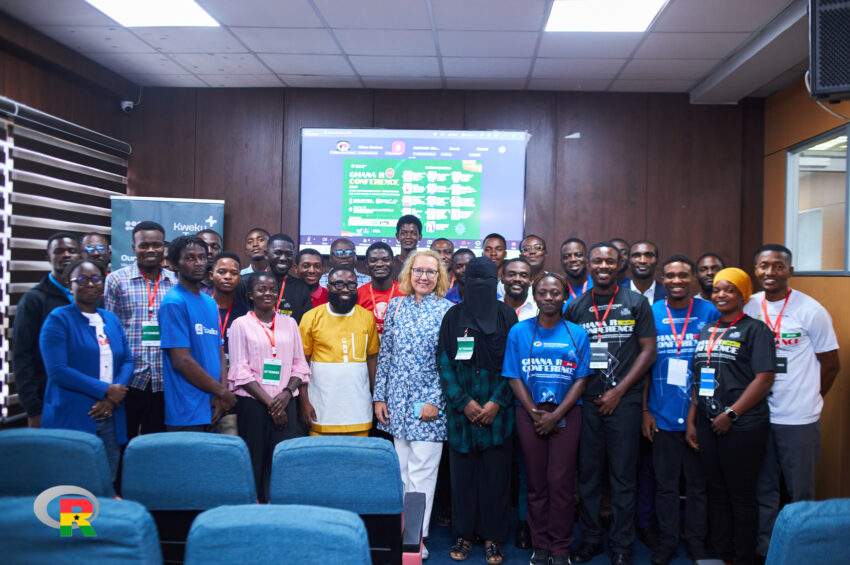
On 9th-10th July 2026, over 60 R users, students, researchers, and very determined engineers gathered at the GNAT Hall in Accra, some in person, others joining in from Nigeria, Brazil, Australia, India, and Costa Rica, the third Ghana R Conference happened exactly as it was supposed to.
Under the theme “Ghana Digitalisation Drive: Transforming the AI Ecospace with R,” this year wasn’t just about scripts and packages. It was about a country actively deciding what its AI future looks like, and a community deciding it wants a hand in writing it.
Setting the Tone
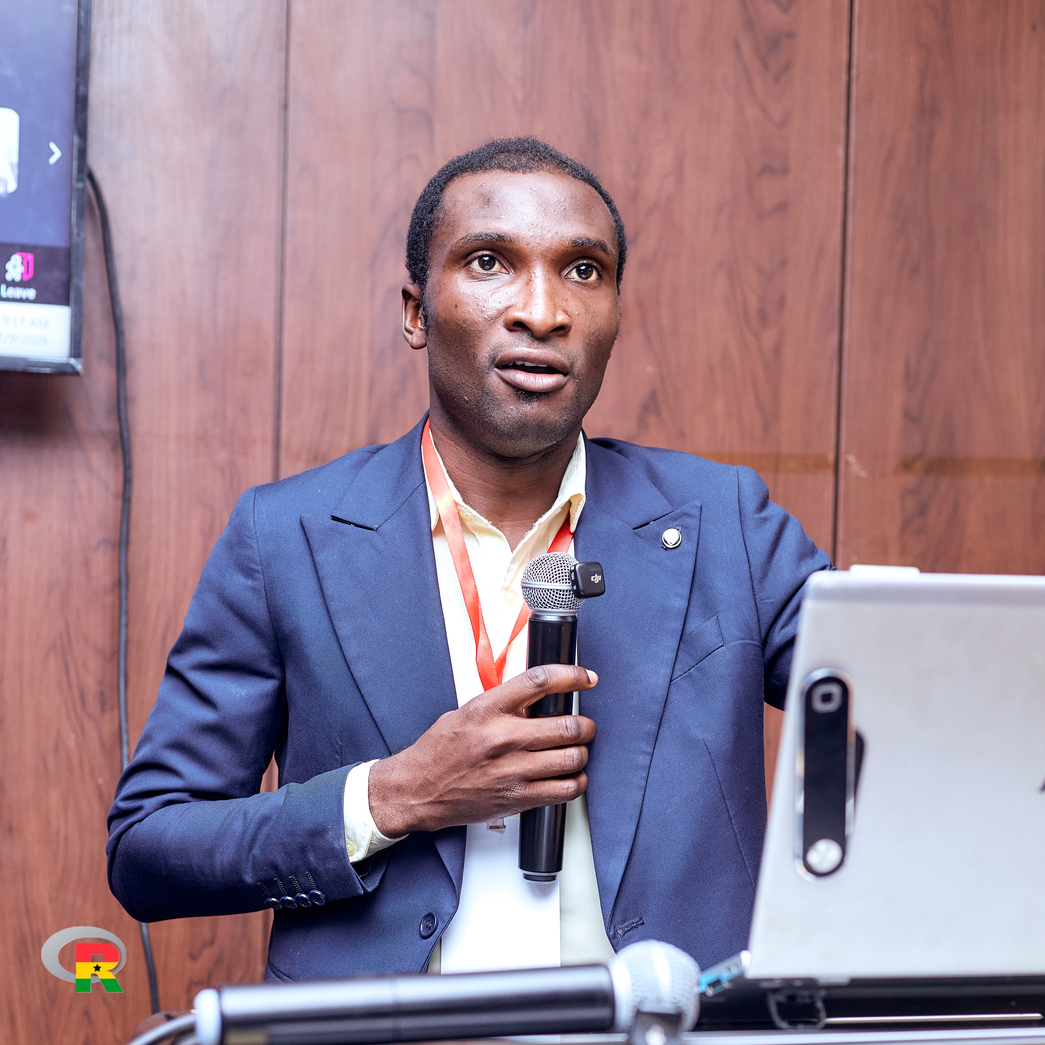 Emmanuel Kafui Djavon, lecturer at Accra Technical University, opened the conference on behalf of the Dean of the Faculty of Engineering, and made the case for R from an engineer’s chair: systems, measurement data, energy data, design outputs, real industrial problems. He argued the conference’s real value was in pairing theory with practical, industry-facing solutions, and called for closer ties between the Ghana R community and institutions like ATU to build capacity in data science and applied research. A warm, purposeful start.
From there, we handed the program to Francis Mensah for 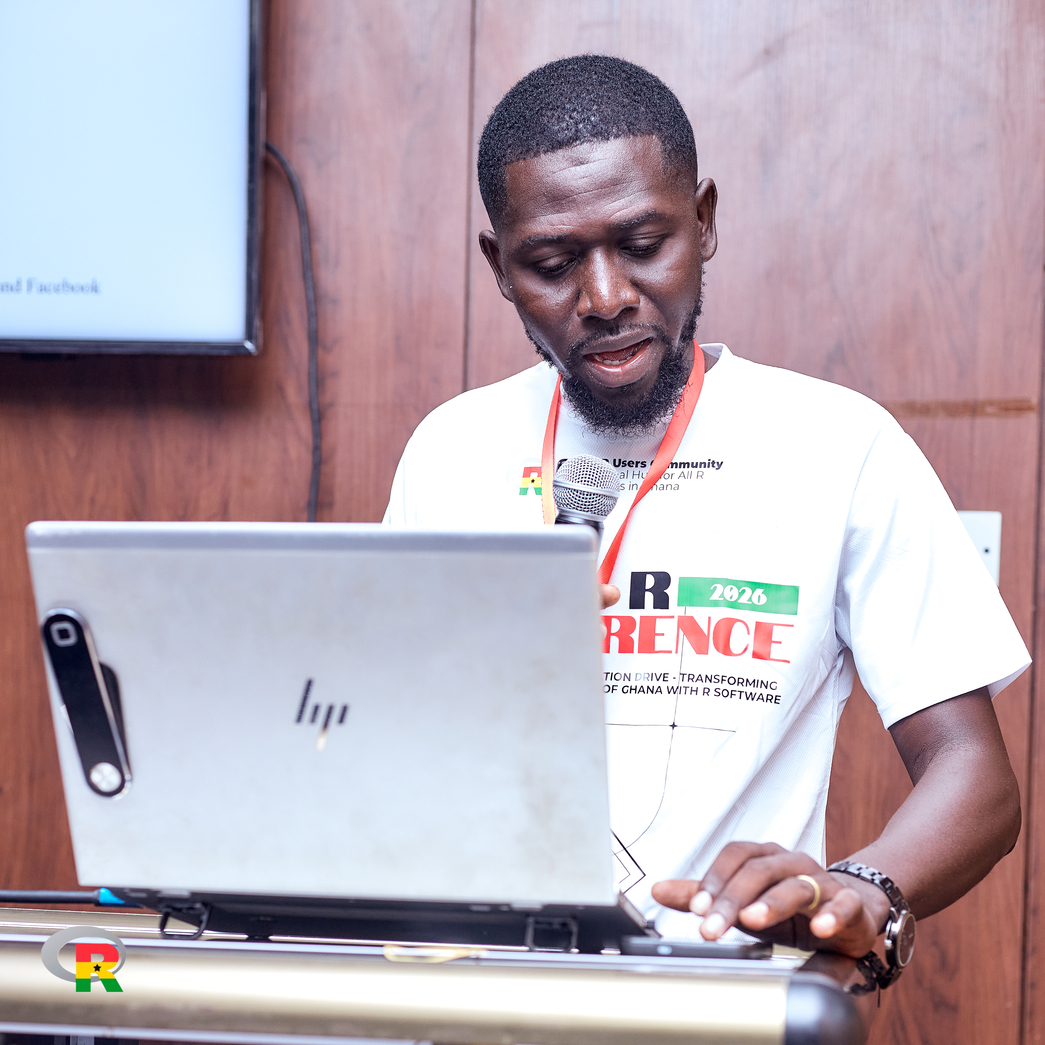 a little family history before the day got technical. As Co-Founder and Conference Director, he took the room through the Ghana R Users Community’s own journey: a scrappy Accra meetup that’s grown into a national hub with training programmes, mentorship, and global partnerships. He was candid about what’s still hard, funding, infrastructure, skills gaps, and just as clear about what’s next: stronger industry ties, more women-focused programmes, and real investment in the next generation. It was the right story to hear before diving into the deep end.
A Keynote With Its Sleeves Rolled Up
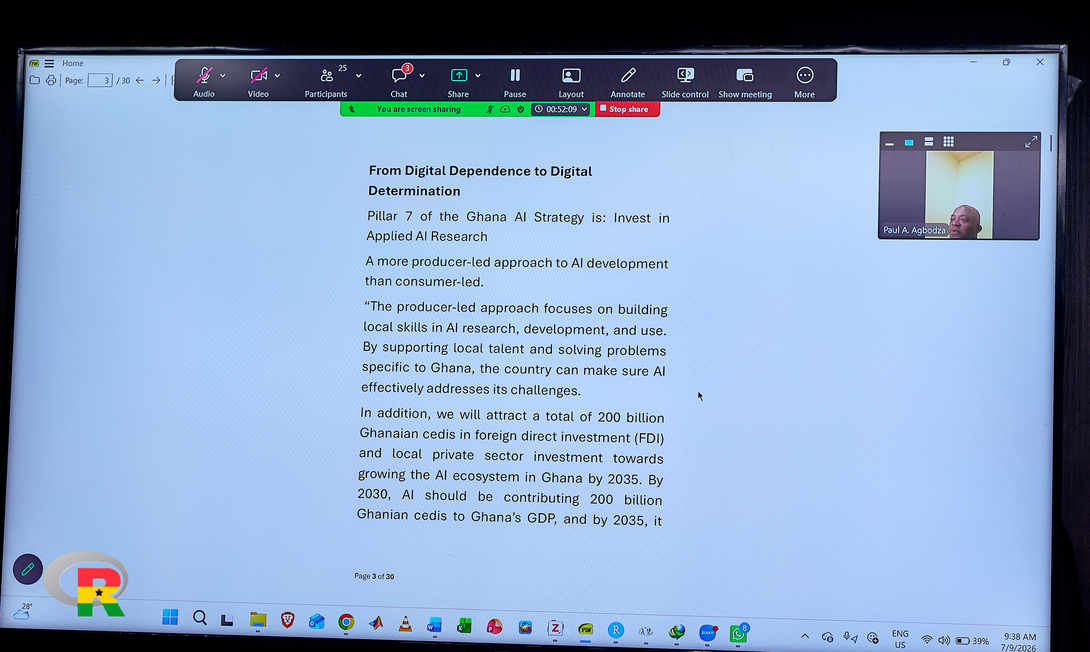 Dr. Paul A. Agbodza followed with the keynote, tying the conference straight to Ghana’s National AI Strategy, launched just months earlier in April 2026. But he didn’t stop at policy. He showed us R actually at work: geospatial maps tracking water quality across the country, a bioinformatics deep dive into sequenced COVID-19 genomes, precision farming dashboards built from messy satellite data, and a live Benford’s Law analysis run against Ghana’s own census and GDP figures to sniff out fraud. He closed with a challenge instead of a victory lap: unreliable electricity, expensive data, and scattered health records are still holding the country back. Progress and unfinished business, in the same keynote.
We were only getting started.
Property, Protection, and Perception
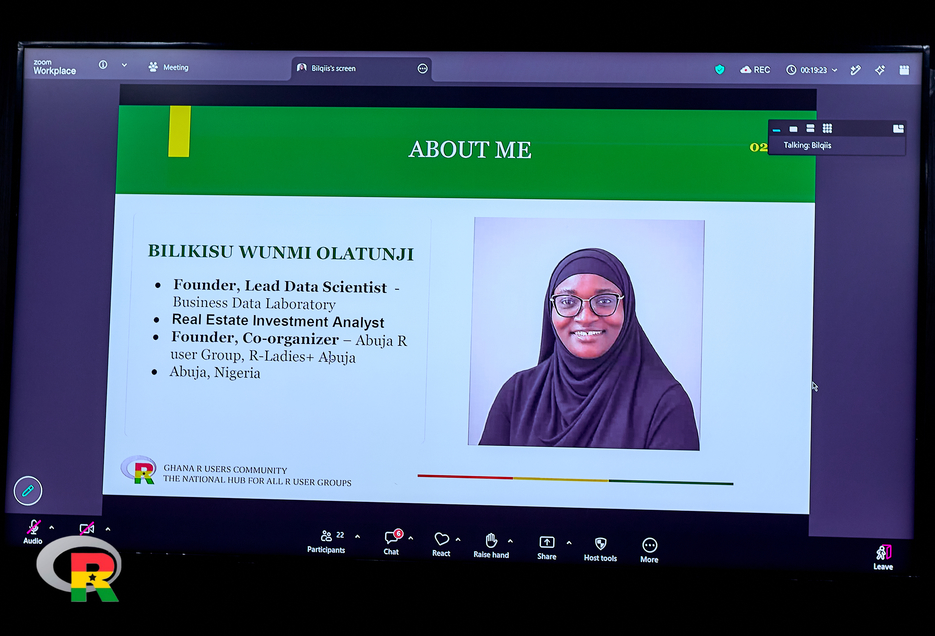 Bilikisu Wunmi Olatunji joined off-camera, battling bad weather and a shaky connection in Abuja, and still delivered one of the sharpest sessions of the conference: a real estate pricing model built on over 24,000 Nigerian property listings, put through 21 separate validation checks before a single algorithm touched it. When the Q&A opened up, she went further than her own slides, using SHAP and LIME to explain not just what her model was doing, but why.
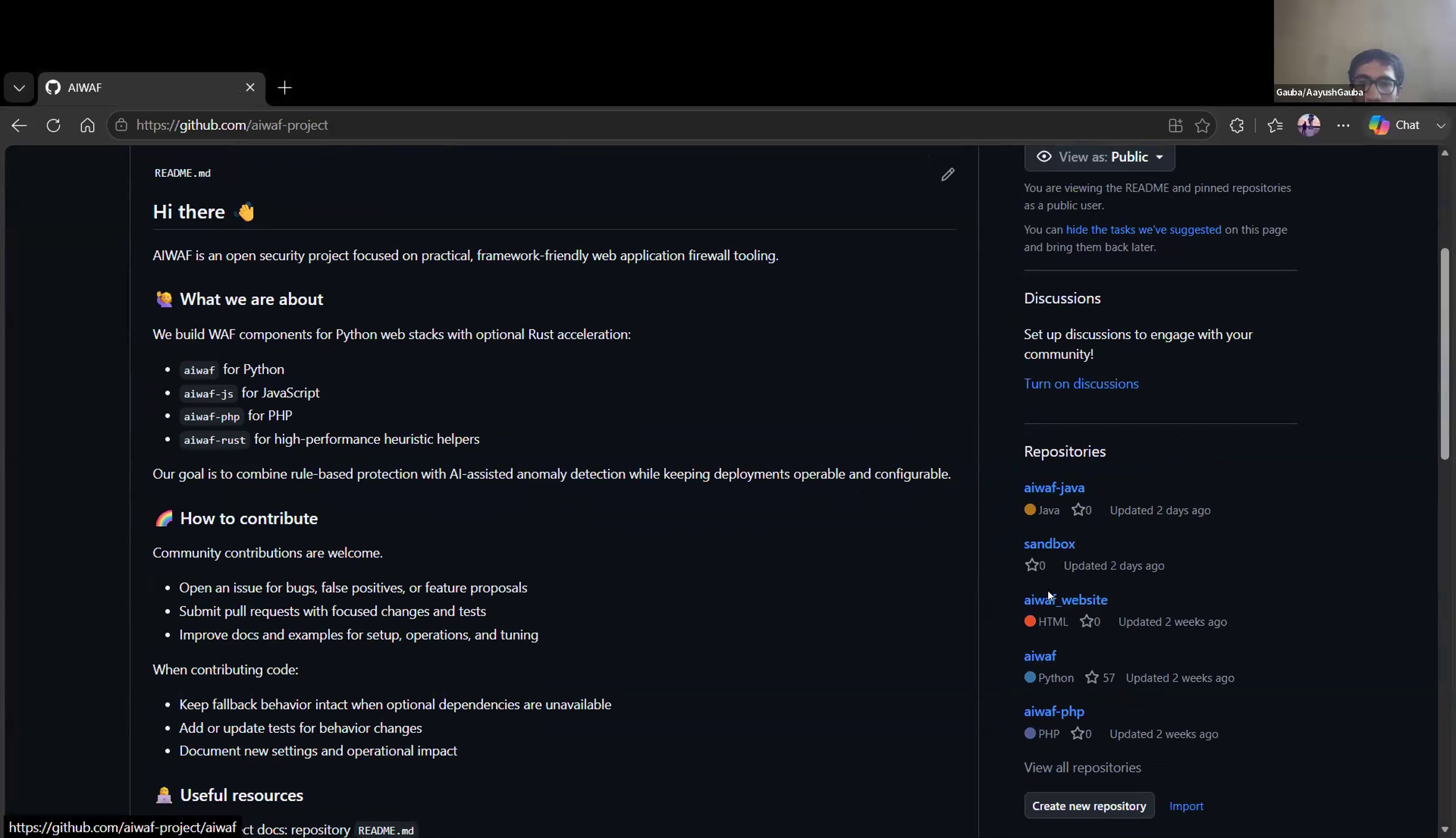 Aayush Gauba had the room’s attention with one sentence: all LLMs are AI, but not all AI is an LLM. Then he backed it with a number that stuck: running even a lightweight neural network on every web request would add half a second of lag, against a budget of milliseconds. That’s the whole reason his security architecture splits the work between fast Java scoring and quiet R retraining in the background.
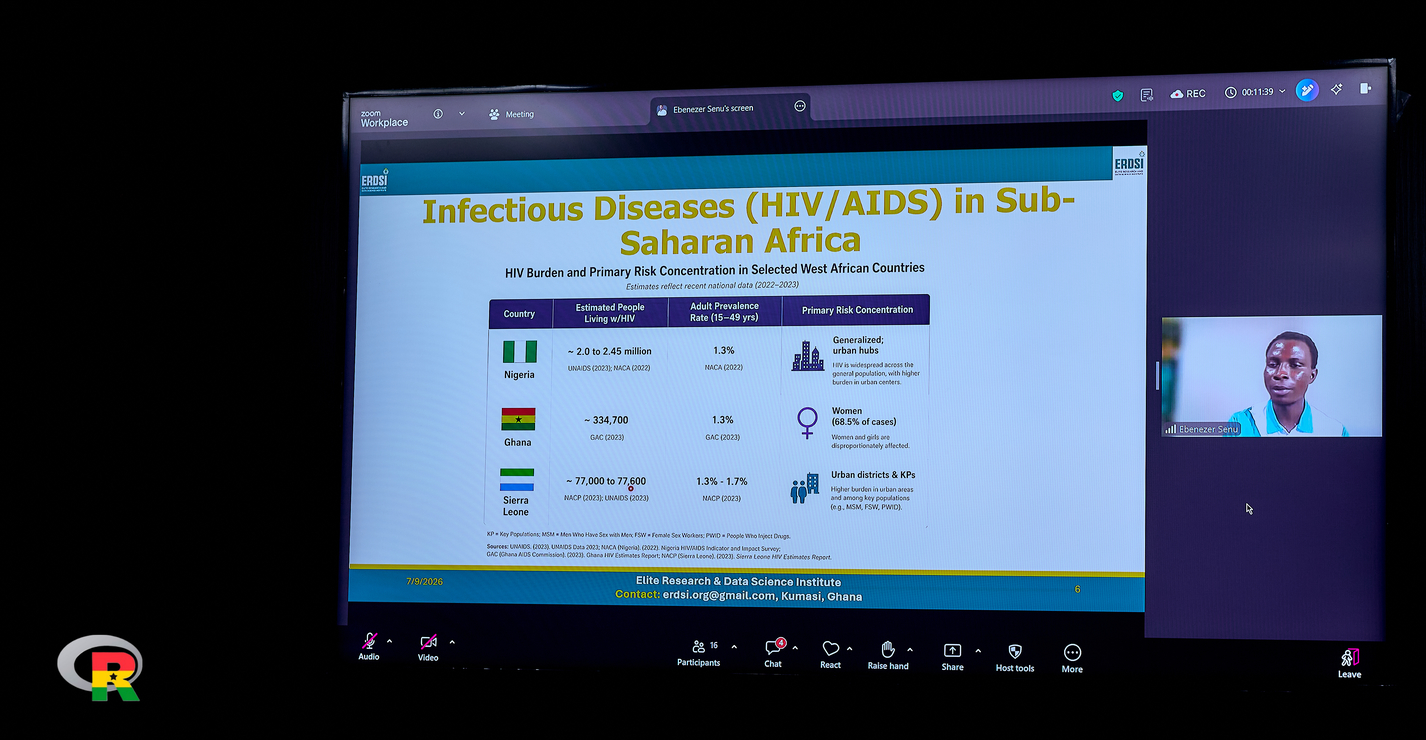 Ebenezer Senu opened by asking the room to rate their own R skills from one to five, and looked genuinely delighted that most people said “beginner.” He grounded a study on CRISPR and HIV in real numbers, millions of lives across Nigeria, Ghana, and Sierra Leone, and explained gene editing in plain English before the statistics ever showed up on screen.
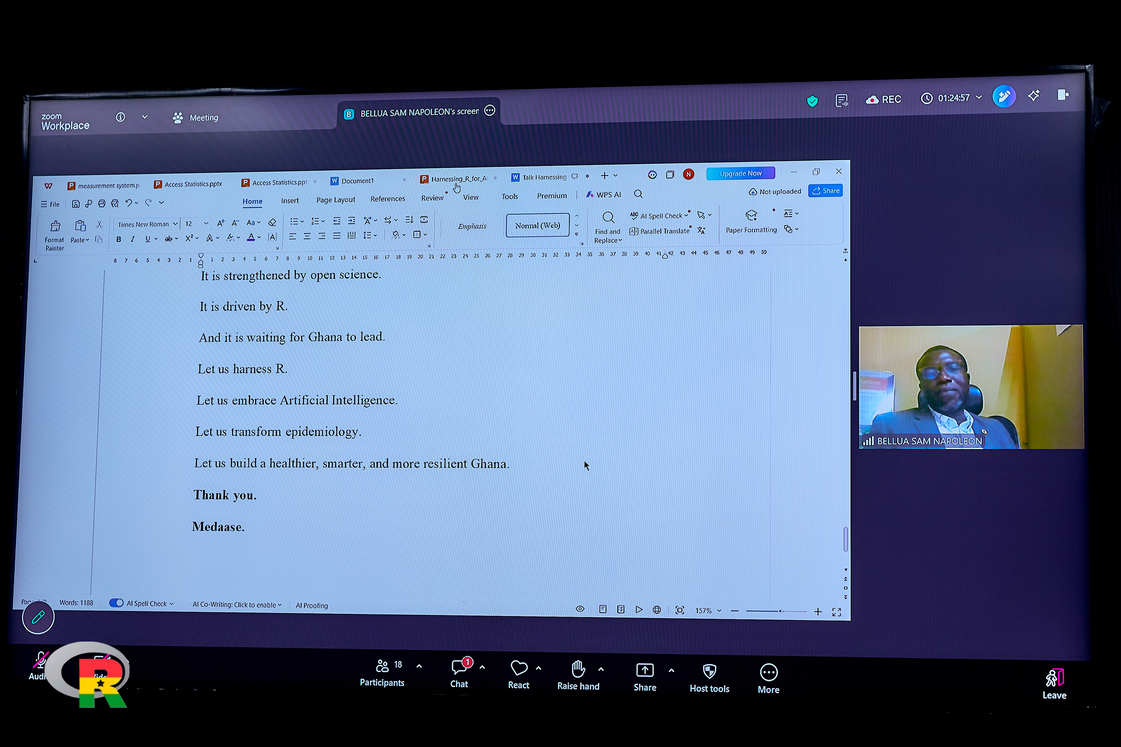 Rev. Prof. Napoleon Bellua Sam closed out Day 1 with a reframe that stuck with everyone in the room: health data might be more valuable than oil, since raw numbers mean nothing until they become decisions, and decisions save lives.
Voices From Three Continents
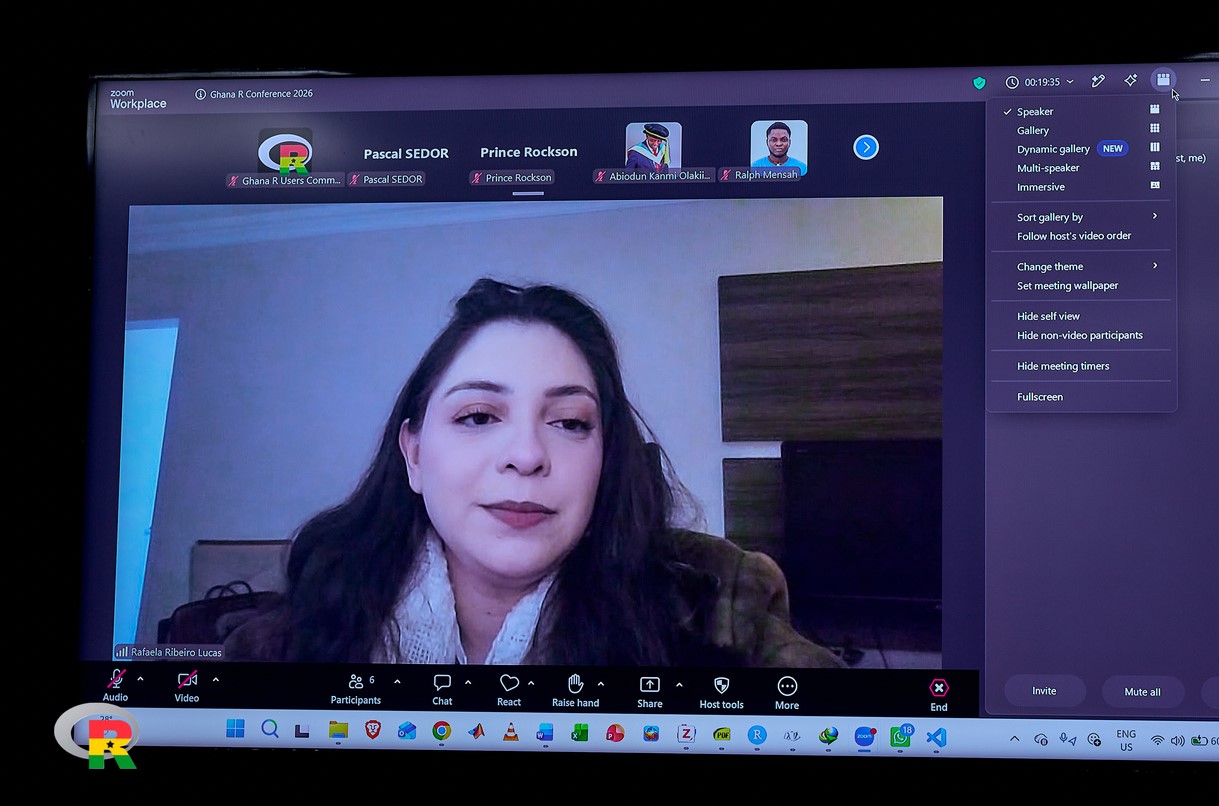 Day 2 opened with Rafaela Ribeiro Lucas, who built two versions of the same cardiovascular dataset live on screen, one for logistic regression, one for machine learning, and when her screen froze right at the results graphs, she finished the talk from memory. Her closing line was worth the wait: start with the clinical question, not the algorithm.
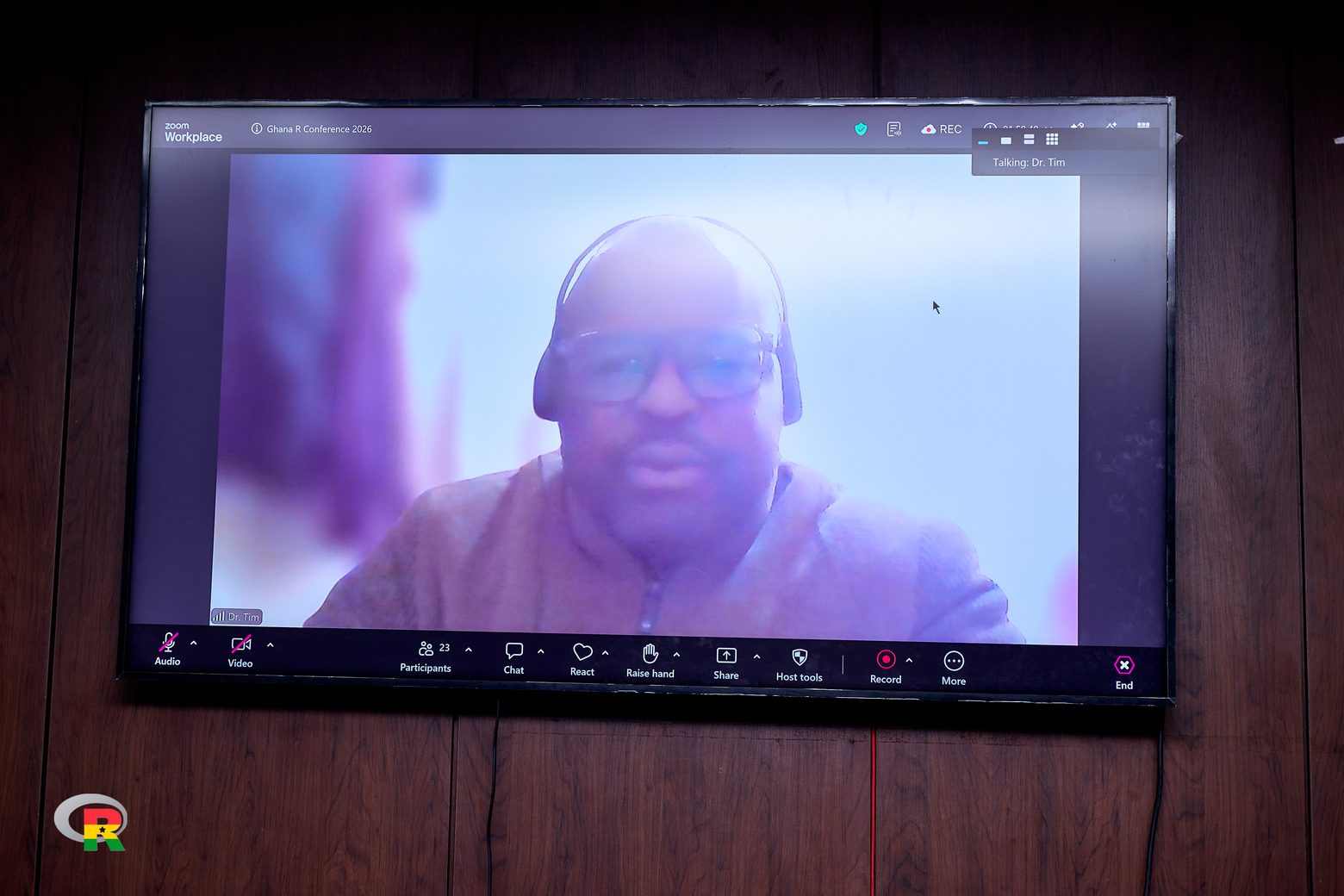 Dr. Timothy A. Ogunleye traced R’s roots back to Bell Labs and a design philosophy built for statisticians, not machines, then compared R and Python’s differing syntax to American and British English, different accents, same language.
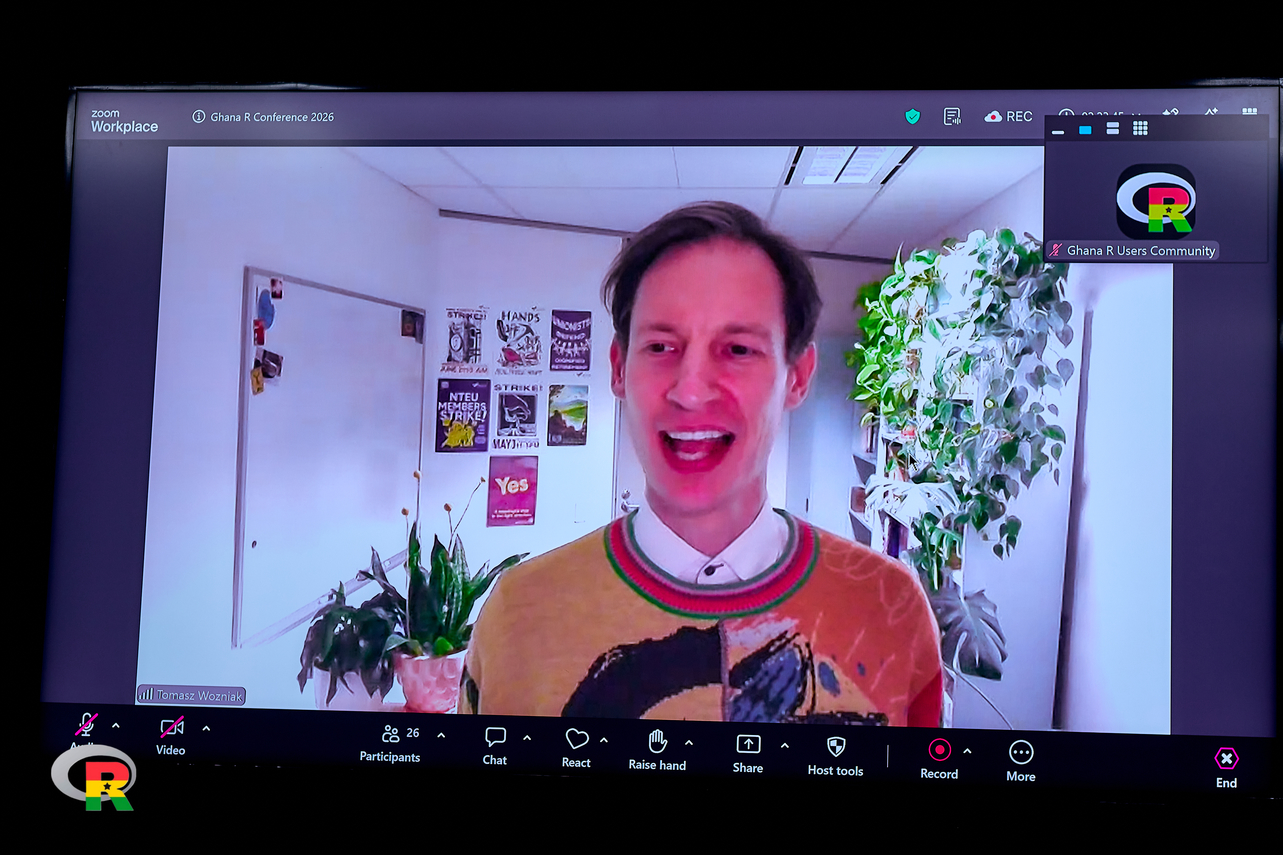 Dr. Tomasz Woźniak dialled in from Melbourne at night, deep into an Australian winter, to introduce bpvars, an R package he built for the International Labour Organization to forecast labour markets across 189 countries, Ghana included.
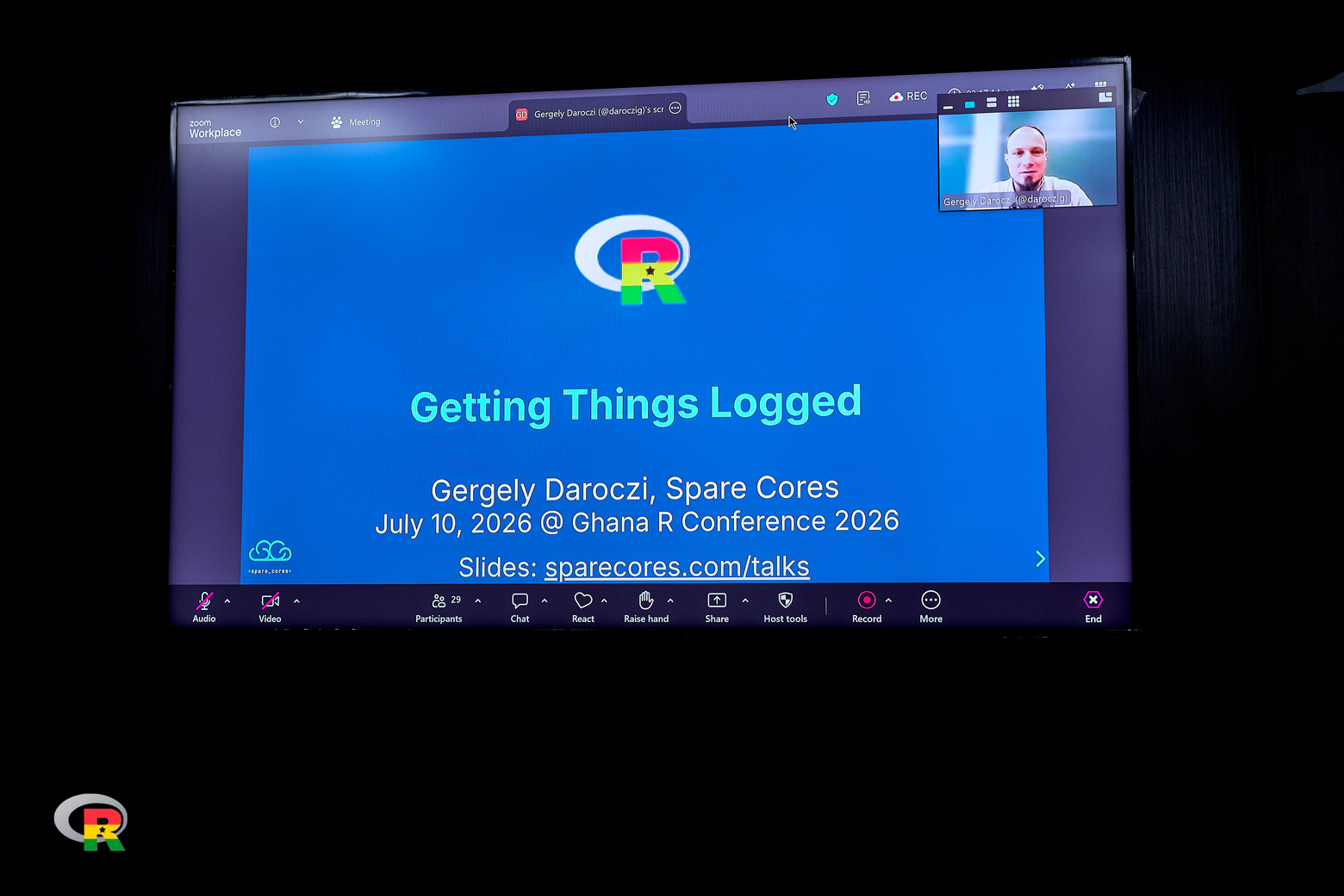 Gergely Daroczi, joining from Warsaw where he was simultaneously attending another R conference that same week, traded in production war stories: fraud detection scripts running around the clock, market reports that used to take interns hours to build by hand. He broke up a talk on logging with a blunt, funny video about not recognising your own code a day later, and reminded everyone that “subscript out of bounds” is probably the most-searched R error on the internet.
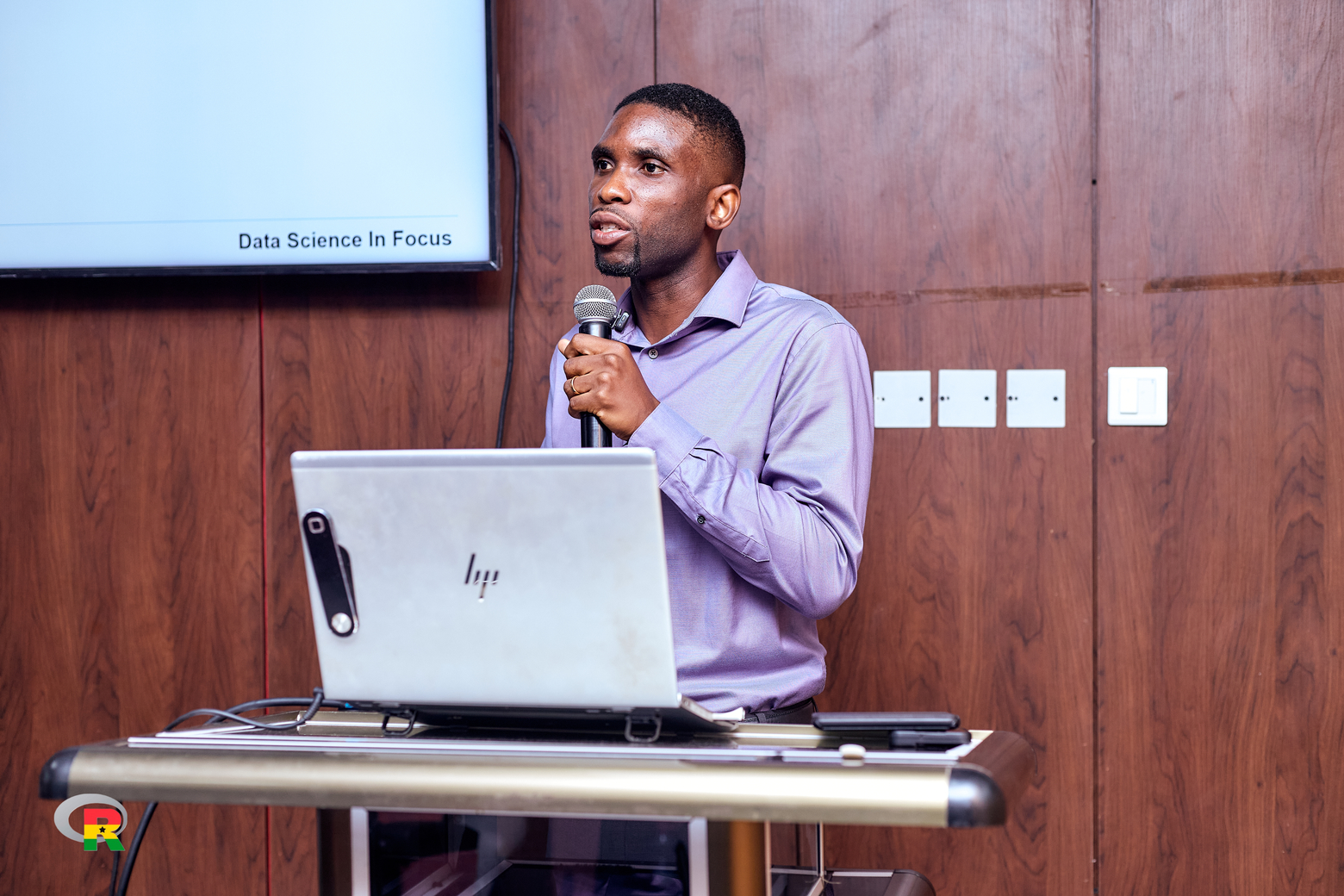 Elorm Goka untangled the alphabet soup of AI, data science, and machine learning for anyone still finding their footing, then mapped out real career paths into the field, exactly the session a room full of students needed.
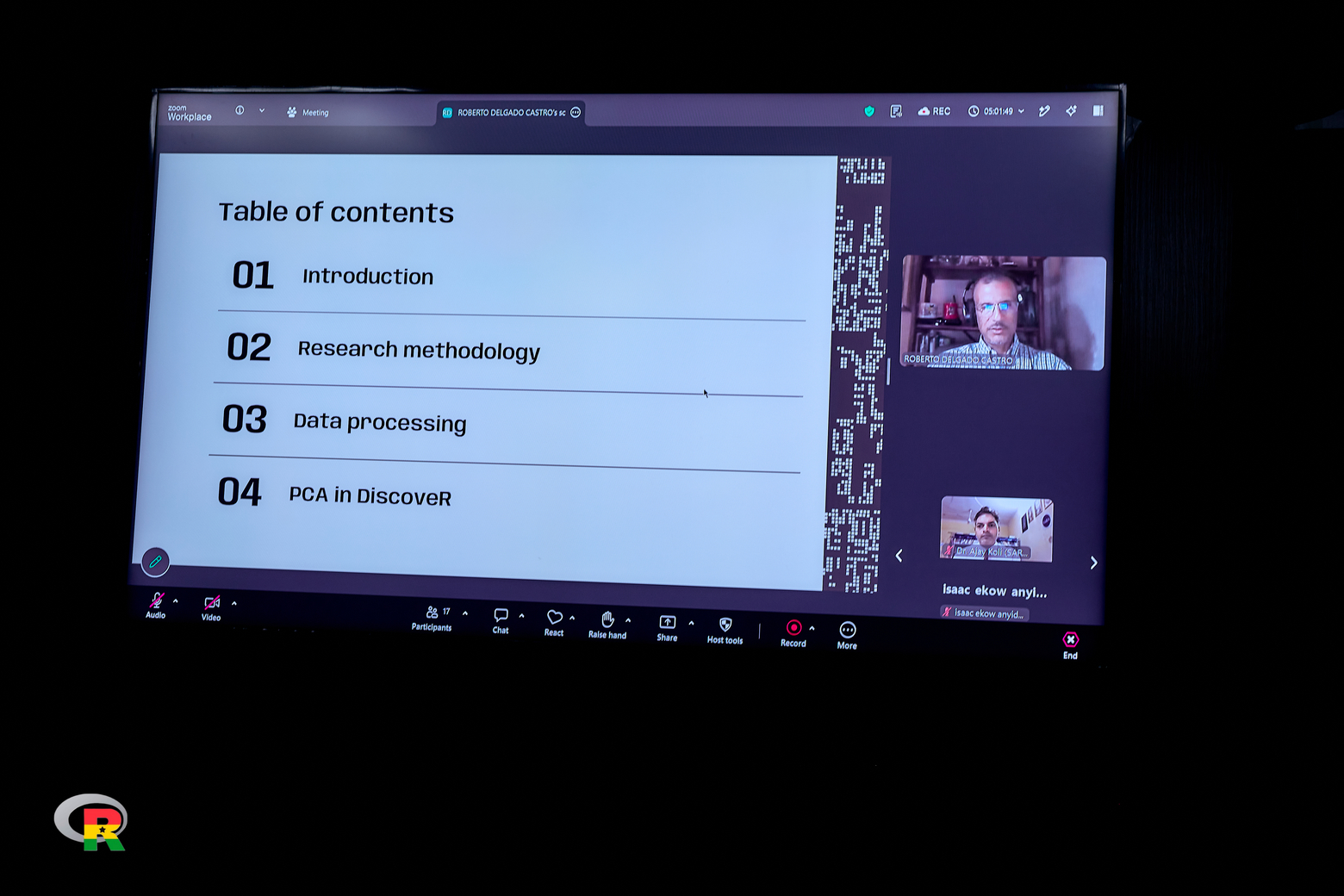 Roberto Delgado Castro brought Costa Rica into the room with a Principal Component Analysis of Latin American labour markets, built on DiscoveR, a CRAN package he wrote himself.
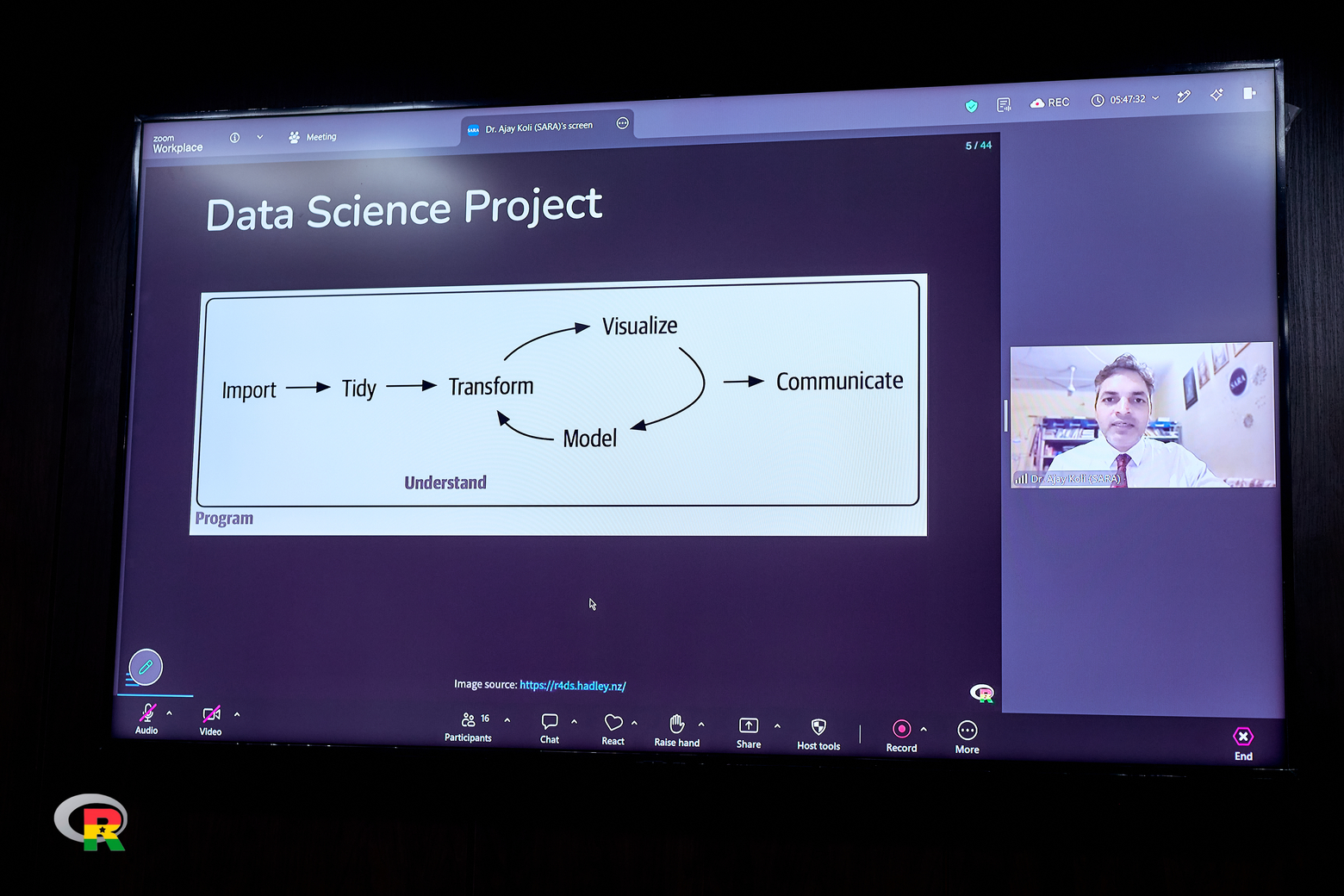 Dr. Ajay Kumar Koli closed out the beginner track from Delhi with a bigger point underneath the syntax: he founded the SARA Institute of Data Science after seeing how algorithmic bias locks people out of opportunity, and pointed the room to Joy Buolamwini’s Unmasking AI as the reason free data science education matters as much as any package on CRAN.
And then, right at the end, a session happened that wasn’t even on the programme. George Kyei Agyen with a bit of time left on the clock, he asked for the floor, pulled a handful of engineering and accounting students into a quick icebreaker, and then pulled up a real client dashboard he’d built in Shiny: a bank soundness index, calculated live across 21 Ghanaian banks. He had the entire room open RStudio and build a Shiny app from scratch, together, on the spot. A dropped screen share and a few seconds of dead air didn’t slow him down for a second. It’s the session people are still talking about.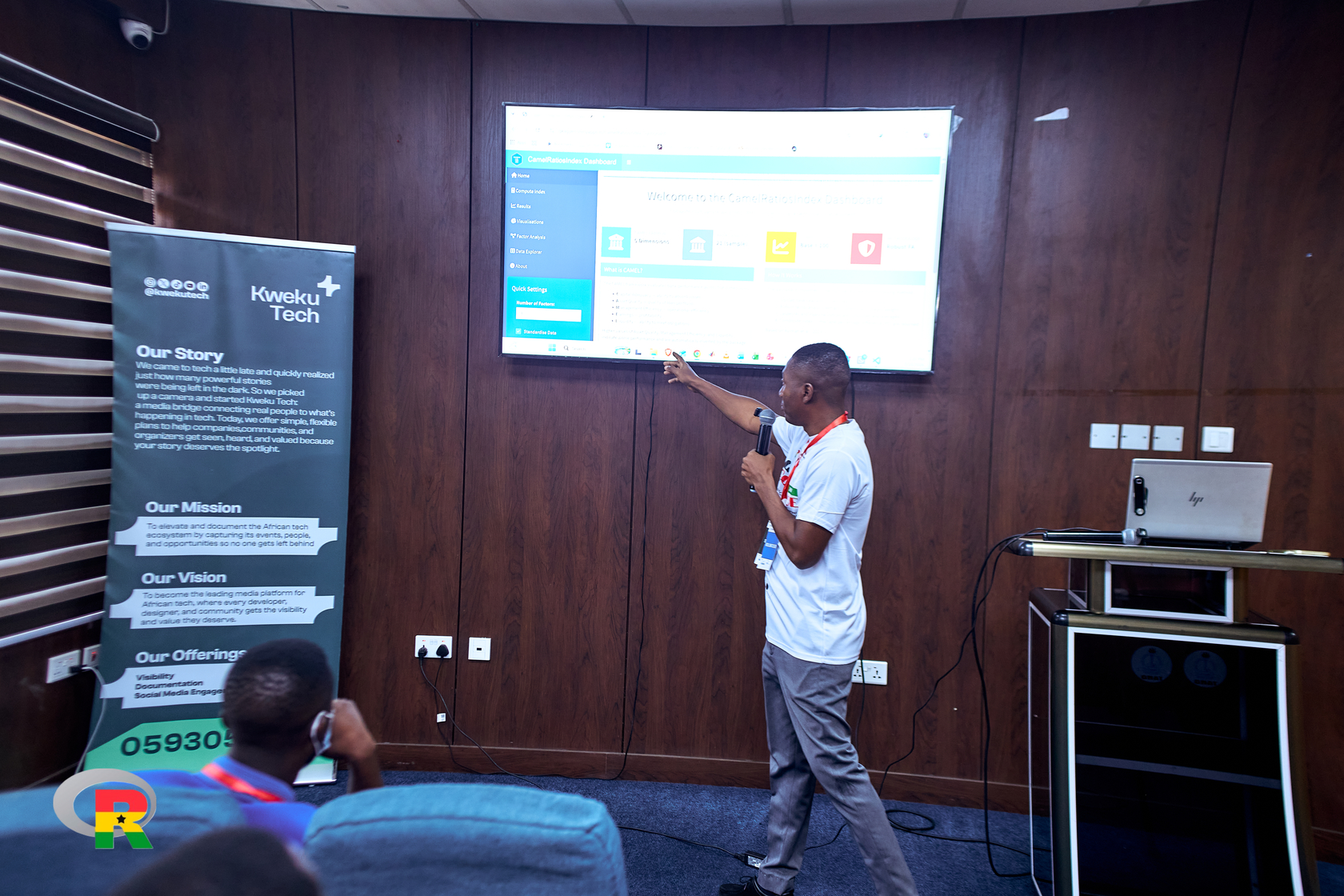
Beyond the Talks: What We Took Away
We heard back from 64 people after the conference, close to everyone who attended. Overall satisfaction landed at 4.23 out of 5. Registration, speaker knowledge, and the venue itself scored the highest marks. Every single respondent said they’d recommend the conference to someone else, and 61 out of 64 are already planning to come back next year.
The feedback wasn’t just applause, and we’re glad it wasn’t. The loudest ask was for more real, applied demonstrations, less theory, more “here’s exactly how I built this.” Right behind it: more in-person speakers, since, unsurprisingly, a face in the room tends to hold a crowd a little better than a face on a screen.
Looking Ahead
As the final session wrapped, one thing was obvious: losing a venue with three days’ notice couldn’t stop this community, and neither could a frozen laptop, a dropped screen share, or a shaky connection three countries away. That’s not a footnote. That’s the whole point.
The fourth Ghana R Conference is already taking shape, next stop: the University of Education, Winneba. More applied sessions. More hands on keyboards. More voices in the room.
Acknowledgements
Huge thanks to our sponsors and partners, the R Consortium, b-data, Jumping Rivers, Ippy Dippy for making this conference possible, and to Conference Alerts, AFREDAC, and KwekuTech for their support. To every speaker who showed up, screen freezes and all: thank you for turning up ready to teach. And to everyone who filled the room, in Accra and everywhere else in the world you joined us from: this community exists because you keep showing up for it.
See you in Winneba.